












.svg)
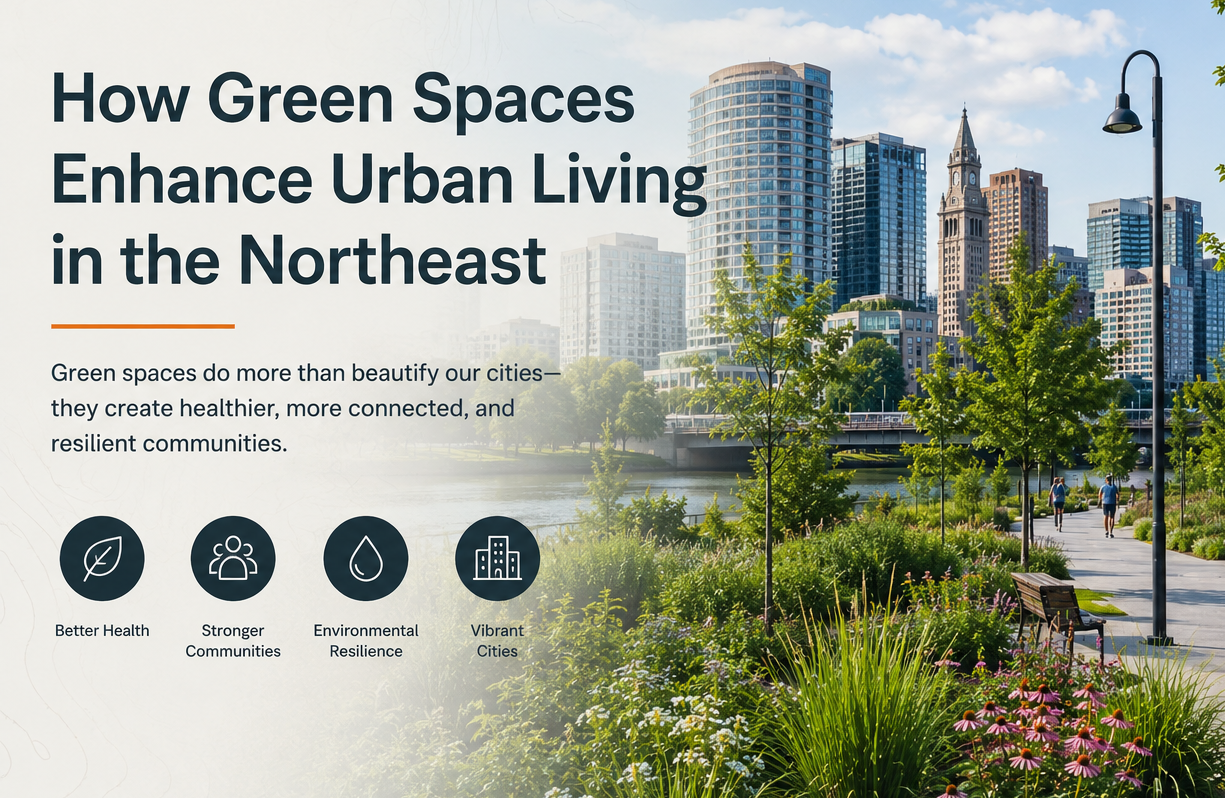
The Northeast United States is home to some of the nation's most densely populated urban areas, a testament to its historic growth and economic vitality. However, urbanization brings challenges, including the urban heat island effect, reduced biodiversity, and heightened stress levels among residents. Green spaces, thoughtfully integrated into urban landscapes, play a transformative role in enhancing the quality of life in these areas. Through the lens of landscape architecture, we explore how these spaces mitigate urban heat, reduce stress, and increase biodiversity, fostering more livable cities.
Mitigating Urban Heat: A Vital Necessity
Urban heat islands (UHIs) are areas within cities where temperatures are significantly higher than surrounding rural areas, often due to the abundance of heat-absorbing materials like asphalt and concrete. The Northeast, with its concentrated urban centers like Boston, New York City, and Hartford, experiences pronounced UHI effects during the summer.
The Role of Green Spaces
Green spaces, including parks, green roofs, and tree-lined streets, are critical in mitigating urban heat:
Cooling Effects
Vegetation cools the air through a process known as evapotranspiration, where plants release moisture into the air, reducing surrounding temperatures.
Shading
Trees and shrubs provide shade, directly cooling the surfaces beneath them and offering relief to pedestrians.
Urban Planning Impact
Strategic placement of green spaces, as implemented by landscape architects, maximizes their cooling benefits. For example, trees placed along major city corridors can reduce temperatures by several degrees, creating cooler microclimates.
Landscape architects collaborate with urban planners to ensure these benefits are embedded within the city fabric. Their expertise in selecting heat-resistant plant species and designing water-efficient landscapes further amplifies the cooling effects.
Reducing Stress: Green Spaces as Urban Sanctuaries
Living in bustling urban environments can often lead to stress, exacerbated by noise pollution, lack of privacy, and limited access to nature. Research consistently highlights the mental health benefits of green spaces, which offer an antidote to urban life's pressures.
How Green Spaces Foster Mental Well-being
Promoting Relaxation
Parks and gardens provide serene environments for relaxation, fostering a sense of calm and reducing anxiety.
Encouraging Physical Activity
Access to well-designed trails and open spaces encourages exercise, which is proven to boost mood and overall health.
Social Interaction
Shared green spaces serve as community hubs, encouraging social interaction and strengthening neighborhood bonds.
Landscape architects play a pivotal role in designing spaces that maximize these benefits. By incorporating features such as walking trails, water elements, and seating areas, they create inclusive environments that cater to diverse populations. In the Northeast, where winters can be long and harsh, these spaces also include elements like winter gardens and evergreen plantings to provide year-round respite.
Increasing Biodiversity: A Sustainable Urban Goal
Urbanization often fragments habitats, threatening local wildlife and reducing biodiversity. However, well-designed green spaces can reverse this trend by creating pockets of habitats that support flora and fauna.
Contributions to Urban Ecosystems
Habitat Creation
Native plants and trees offer food and shelter to birds, insects, and small mammals, enhancing ecological networks.
Pollinator Pathways
Gardens with pollinator-friendly plants support bees and butterflies, vital for ecological balance and agriculture.
Stormwater Management
Green infrastructure, such as rain gardens and bioswales, not only supports biodiversity but also manages stormwater, reducing urban flooding.
In the Northeast, where native species like oaks, maples, and milkweed are integral to the ecosystem, landscape architects ensure these are prioritized in designs. This approach not only bolsters biodiversity but also connects urban dwellers with their region's natural heritage.
The Role of Landscape Architects: Bridging Urban and Natural Worlds
At the heart of urban green space development lies the expertise of landscape architects. Their role extends beyond aesthetics to address functionality, sustainability, and community engagement. Key contributions include:
Master Planning
Developing comprehensive plans that integrate green spaces into urban developments.
Sustainable Practices
Incorporating stormwater management, native plantings, and low-maintenance designs.
Community-Centered Design
Engaging with residents to understand their needs and preferences, ensuring the spaces serve as communal assets.
Firms like Solli exemplify this approach, blending technical expertise with creative vision to create spaces that not only beautify but also serve essential ecological and social functions.
Notable Green Space Projects in the Northeast
The Northeast offers inspiring examples of how green spaces can transform urban living:
The High Line (New York City):
A reclaimed rail line turned urban park, it offers a model for integrating green spaces into dense cityscapes.
Boston's Rose Kennedy Greenway:
This vibrant series of parks enhances biodiversity and serves as a cultural and recreational hub.
Hartford's Bushnell Park:
As one of the oldest publicly funded parks in the U.S., it demonstrates the enduring value of urban green spaces.
These projects highlight the potential for green spaces to revitalize urban areas, improve air quality, and foster a sense of community.
Challenges and Future Directions
Despite their benefits, green spaces face challenges such as limited urban land, funding constraints, and climate change. Landscape architects address these by:
- Innovative Design Solutions: Vertical gardens, green roofs, and pocket parks make efficient use of limited space.
- Public-Private Partnerships: Collaborations between municipalities, developers, and non-profits secure funding and support.
- Resilience Planning: Designs that withstand climate impacts, such as flooding and heat waves, ensure longevity and effectiveness.
Conclusion
Green spaces are more than aesthetic additions to urban areas; they are vital infrastructure for sustainable, healthy, and livable cities. In the Northeast, where urbanization and environmental challenges intersect, the thoughtful design and integration of green spaces by landscape architects play a transformative role. By mitigating heat, reducing stress, and increasing biodiversity, these spaces enhance urban living, fostering resilient and vibrant communities. As cities continue to grow, investing in green infrastructure will remain a cornerstone of sustainable development, ensuring a harmonious balance between urban and natural environments.




.svg)