












.svg)
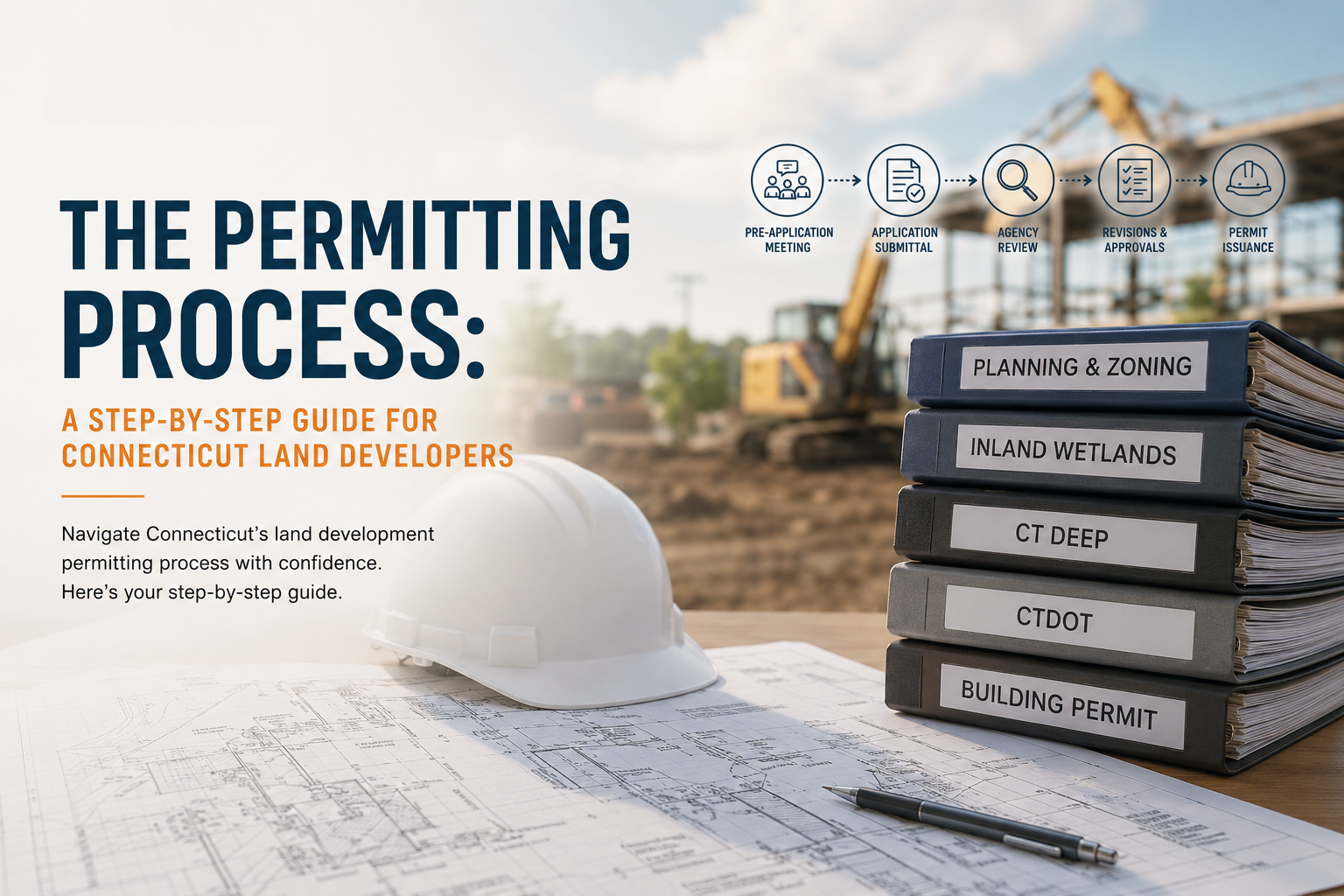
Permitting is one of the most critical phases of any land development project. In Connecticut, a state known for its layered and often complex regulatory landscape, understanding the process is essential to staying on schedule and on budget. Whether you're developing residential communities, commercial plazas, or mixed-use facilities, navigating permitting efficiently requires expertise, foresight, and collaboration.
This guide outlines the essential steps land developers need to follow and highlights how partnering with Solli Engineering can streamline the process.
Step 1: Define Your Project and Identify Applicable Permits
The first step is understanding your site and proposed use. Your zoning classification, environmental conditions (such as wetlands or floodplains), and project type (commercial, residential, industrial) determine which local, state, and federal permits are required.
Key questions to ask:
- Does the site require a zone change, variance, or special exception?
- Are there inland wetlands or floodplain encroachments?
- Will your project impact traffic patterns or public infrastructure?
Resources:
Step 2: Conduct Due Diligence and Develop Technical Documentation
Once permitting needs are established, your engineering team should conduct a full due diligence investigation. This includes:
- Topographic, boundary, and ALTA surveys
- Phase I Environmental Site Assessment (ESA)
- Site layout and grading
- Stormwater management systems
- Utility coordination and septic design (if applicable)
- Traffic studies or impact analyses
Thorough documentation not only supports a smoother permitting process—it also reduces costly redesigns down the road.
Pro Tip: Engage with agencies early. Pre-application meetings with Planning & Zoning Commissions, Inland Wetlands Agencies, or CT DEEP can clarify expectations and build goodwill.
Step 3: Submit Applications to the Appropriate Agencies
Most Connecticut development projects require approvals from multiple entities. Typical permitting bodies include:
- Local: Planning & Zoning Commission, Inland Wetlands Commission, Building Department, Health Department
- State: Connecticut Department of Energy & Environmental Protection (DEEP), Office of the State Traffic Administration (OSTA)
- Federal: U.S. Army Corps of Engineers (for wetlands, waterways)
Application packages must be complete and accurate. Missing documentation or unaddressed requirements can stall your approvals for weeks or months.
Helpful Tools:
Step 4: Respond to Agency Comments and Revise Plans
Regulatory reviews often involve back-and-forth communication. Agencies may request:
- Revised grading plans or stormwater calculations: Agencies may ask for updates to address concerns about runoff volume, water quality impacts, or inconsistencies in the proposed drainage design. This often involves revisiting grading elevations or refining the stormwater management approach.
- Additional traffic data or turning movement diagrams: This includes more detailed traffic counts, peak hour analysis, or modeling to assess how proposed access points and site circulation will impact nearby intersections or roadways.
- Environmental mitigation strategies: If your project affects wetlands, endangered species habitats, or other sensitive areas, agencies may require specific plans to avoid, minimize, or offset those impacts—such as wetland replication, conservation easements, or buffer plantings.
Timely and strategic responses are key to maintaining momentum. An experienced consulting partner can anticipate these comments and proactively address them before formal review.
Step 5: Finalize Approvals and Begin Construction
Once all conditions are satisfied, permits are issued and construction can begin. Final steps may include:
- Posting of performance bonds: These financial guarantees ensure that required improvements, such as roadways or stormwater systems, are completed to municipal standards. The bond is typically held by the town until the work is verified and approved.
- Recording of easements or land use restrictions: This may include utility easements, access agreements, or conservation restrictions. Proper documentation and recording are critical for future land use clarity and compliance.
- Final pre-construction meetings: Coordinated with town officials, design teams, and contractors, these meetings confirm that all conditions of approval have been met, roles are understood, and construction can proceed without delay.
At this point, maintaining compliance through construction oversight and regular inspections is essential to avoid violations.
How Solli Supports Permitting Success
Solli is more than an engineering and design consultant—we're your permitting partner. With over a decade of experience and thousands of approvals secured across Connecticut and New England, we understand the intricacies of local, state, and federal regulations.
What we offer developers:
- A multidisciplinary team of civil engineers, traffic specialists, landscape architects, and environmental experts
- Established relationships with municipal boards and state agencies
- Proven strategies to keep your project moving—despite regulatory hurdles
Whether you're developing a retail center in Monroe or a multifamily project in West Hartford, Solli Engineering delivers the expertise and responsiveness you need to move from concept to construction—confidently.
Ready to start your next project? Connect with our team and learn how we can accelerate your success.




.svg)